
WHAT IS A SNAPSHOT?
Continuity When Systems Retire
Enterprise systems are eventually replaced.
Licenses expire. Vendors change. Platforms modernize. Regulatory expectations evolve. Infrastructure can be removed quickly. Knowledge cannot.
A Snapshot provides a structured, durable representation of a legacy system at the point of decommissioning. It preserves business records in a defensible, durable, and reusable format so that access, evidence, and context remain intact long after the original application has been retired.
Systems change. Knowledge must endure.

From Application to Continuity
When a legacy platform is decommissioned, organizations face a decision.
They can maintain the system indefinitely to preserve access, or they can extract fragments of data and attempt to reconstruct context later.
A Snapshot provides a third path. It transforms each business record into a digitally signed PDF collection that may include:
-
Extracted application field data
-
Application screenshots
-
Attached documents
-
Reports
-
Related external references
Each collection corresponds to a single business entity — such as an employee, customer, patient, or case record — captured in a structured format designed for long-term retention and access.
The system can be retired but the record remains complete.
.png)

Structured Representation, Not Fragmented Archiving
Traditional archiving often preserves documents or raw data exports.
A Snapshot preserves structure.
Within each collection, information is organized into data-rich sections known as artifacts. These artifacts retain the contextual relationships that once existed inside the application, including field values, screens, embedded references, and related documentation.
Each document includes integrity and conformance elements such as digital signatures and audit sections, ensuring that preserved records remain trustworthy and defensible over time.
Continuity is not improvised. It is structured.
The Unit of Continuity Within Governance
Within Systems Transition Governance, Snapshots serve as the unit of continuity.
Governance requires durable representations of system state. Without them,
repeated system transitions risk fragmenting institutional knowledge across the
estate.
By preserving both information and the structure that gives it meaning, Snapshots
enable systems to change without severing access to historical understanding. They transform system retirement from a technical shutdown into a controlled process of continuity preservation.
System replacement becomes manageable when continuity is structured.
Designed for Long-Term and Contextual Access
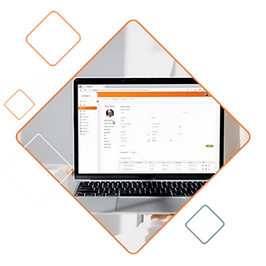
Snapshots are contextually accessible directly from within replacement systems through the Snapshot Insights button. With a single click, users are presented with snapshot records that are intelligently linked to the data displayed on their current screen— eliminating the need to toggle between systems or search manually.
For long-term governance, Snapshots can also be exported into an organization’s
Enterprise Content Management (ECM) platform, where they inherit existing access
controls, retention policies, and records management protocols.
Snapshots are fully searchable through:
-
Field-level queries
-
Full-text search
-
Conversational AI interfaces
The original system may be retired but the information remains accessible, searchable, and verifiable.

Frequently Asked Questions
Q: How is a Snapshot different from traditional archiving?
A: Traditional archiving typically preserves documents or raw data extracted from a system. A Snapshot preserves both the information and the structure that gives that information meaning.
Rather than retaining disconnected files, a Snapshot transforms each business record into a structured, digitally signed PDF collection that may include extracted field data, application screenshots, reports, attached documents, and related references. This preserves not only content, but context.
Within Systems Transition Governance, this structured preservation allows legacy applications to be retired without severing access to institutional knowledge.
Q: Are there different types of Snapshots?
A: Yes. There are two primary types of Snapshots:
Archive Snapshots are created as part of a structured, scheduled decommissioning process. They represent the formal preservation of a legacy system at retirement.
Live Snapshots are generated on demand in response to a user request. These are typically created when an Archive Snapshot has not yet been produced, or when a user needs Snapshot-format documentation derived from the replacement system.
Q: What role do Snapshots play within Systems Transition Governance?
A: Snapshots serve as the unit of continuity within the governance model.
Systems change repeatedly over time. Without structured continuity, knowledge can fragment across transitions. Snapshots provide a durable, defensible representation of system state at the point of decommissioning, ensuring that screens, structured data, documents, metadata, and contextual relationships remain accessible after the original platform is retired.
In this way, Snapshots transform system retirement from a technical event into a controlled process of continuity preservation.